

A new beginning in Valencia for six rescued marine mammals
A dramatic transatlantic rescue operation has brought two beluga whales and four dolphins safely from Canada to their new home at Valencia's Oceanogràfic.
The six animals — female belugas Cleopatra and Jelly Bean, and dolphins Tsunami, Lida, Echo and Marina — were transferred from Marineland in Ontario following months of uncertainty over their future.
Their journey to Spain was the result of an extensive international operation involving veterinary teams, animal care specialists and transport experts. Before departure, each animal underwent individual health assessments to ensure they were capable of making the long journey.
The animals first travelled by road from Marineland to Toronto before being carefully loaded onto a specially chartered aircraft. Following a flight of approximately seven hours across the Atlantic, they arrived safely in Valencia, where specialist teams from Oceanogràfic were ready to receive them.
The operation was particularly complex because of the social nature of cetaceans. Belugas and dolphins form strong relationships, meaning that the welfare teams had to carefully consider which animals should travel together in order to reduce stress during the transfer.
The move has given the six animals a future after the closure of the Canadian marine park left uncertainty surrounding the fate of its remaining cetaceans.
For Oceanogràfic, the rescue represents another important contribution to marine animal conservation. The centre has previous experience caring for beluga whales and was involved in the rescue of two animals from Ukraine in 2024, which had been living close to the conflict zone in Kharkiv.
A unique marine centre in the heart of Valencia
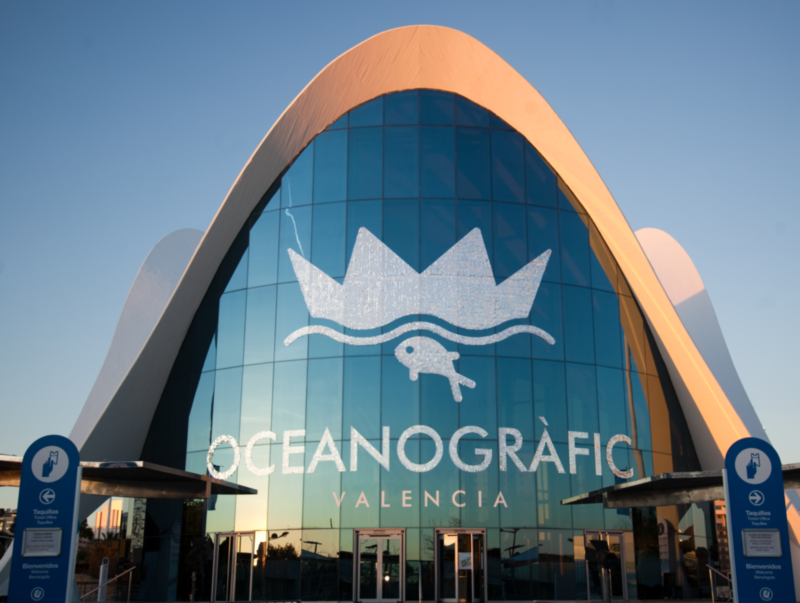
The Oceanogràfic is the largest aquarium in Europe and home to more than 45,000 animals. Located within Valencia's spectacular City of Arts and Sciences, it is internationally recognised for its marine research, conservation and education programmes.
The complex is also famous for its remarkable architecture. The wider City of Arts and Sciences was conceived by architect Santiago Calatrava, while the Oceanogràfic features the distinctive work of Spanish-Mexican architect Félix Candela.
Candela's dramatic curved roofs, which appear to rise like waves from the water, have become one of Valencia's most recognisable architectural images. The structural design was developed with the collaboration of engineers Alberto Domingo and Carlos Lázaro, and Oceanogràfic became Candela's final major project.
Oceanogràfic meets international standards for animal safety and welfare and holds accreditation from major zoological organisations, including the European Association of Zoos and Aquaria (EAZA) and the Association of Zoos and Aquariums (AZA).
The centre also takes part in marine animal rescue operations, scientific research and conservation programmes.
For the newly arrived animals, however, the immediate priority is settling into their unfamiliar surroundings. They will remain under close observation in areas away from visitors while their caregivers monitor their health and behaviour.
There will be no rush to introduce them to the public. Their adaptation will take place gradually and according to the needs of each individual animal.
For six marine mammals whose future had become increasingly uncertain, the journey from Canada to Valencia represents more than a change of location.
It is a second chance.