





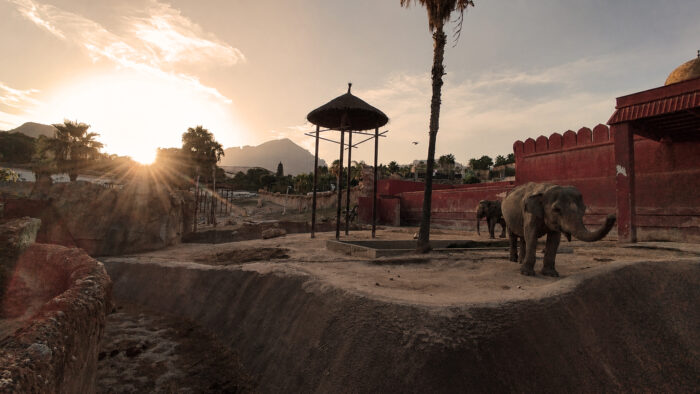
The recent solar eclipse produced some fascinating reactions among the animals at Terra Natura Benidorm, with keepers recording unusual vocalisations and subtle changes in behaviour during the most intense phase of the astronomical event.
Asian elephants, flamingos and barasingha deer were among the species observed displaying increased vocal activity. The behaviour of the flamingos and barasinghas particularly surprised the experts, as they began vocalising at a time of day when this is not normally observed.
The elephants generally continued with their usual routines, although one female was recorded making low-frequency vocalisations during the moment of greatest darkness, possibly in response to the sudden change in light levels.
The squirrel monkeys also showed brief signs of confusion as daylight diminished. They moved to the upper part of their enclosure, an area where they normally sleep at night. As soon as the light began to return, however, they resumed their normal activity and started feeding again.
The observations at Terra Natura Benidorm form part of a pioneering project coordinated by the Iberian Association of Zoos and Aquariums (AIZA), involving around a dozen zoological parks and aquariums across Spain and Portugal.
The project aims to gather information about possible changes in animal behaviour during solar eclipses, including movements, social interaction, vocalisations, daily routines and resting patterns.
The findings from this eclipse will be analysed alongside observations from the other participating centres. Further research will take place during the solar eclipses expected in August 2027 and January 2028, providing further opportunities to understand how these extraordinary astronomical events may influence wildlife.
For Terra Natura Benidorm, taking part in the project highlights its important role not only in animal conservation and education, but also in scientific research and public awareness.
Tickets to visit Terra Natura Benidorm are now on sale here.