


Terra Natura Benidorm is celebrating World Bee Day today with a special educational activity designed to raise awareness about the essential role of pollinators in maintaining biodiversity and healthy ecosystems.
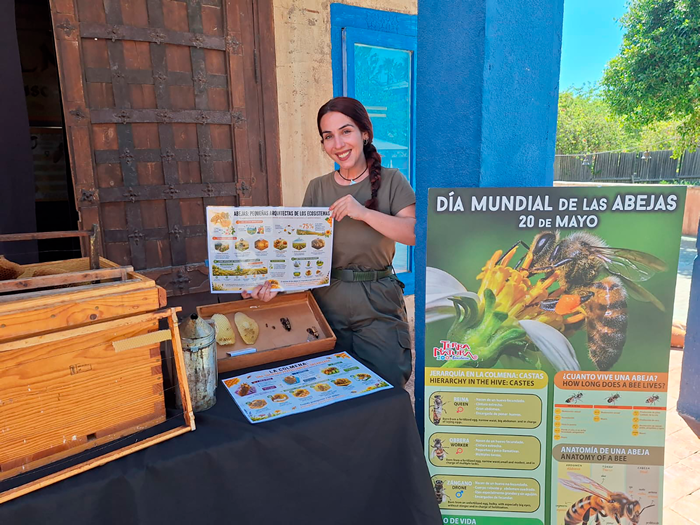
Organised by the park’s Education Department, the event will take place this afternoon at 4:00 pm in the park’s beehive area under the format “Meet the Educator”. The activity aims to help visitors better understand the biology, diversity and ecological importance of bees and other pollinating insects, as well as the growing threats they face worldwide.
Through educational materials, biological resources and beekeeping tools, participants will learn how pollinators contribute not only to the balance of natural ecosystems but also to global food production.
The materials used during the activity have been provided by local beekeeper Salvador Andrés, who is responsible for managing the beehive at Terra Natura Benidorm. The hive serves an educational purpose focused on promoting environmental awareness and highlighting the importance of bees as a key element in ecosystem conservation.
World Bee Day is celebrated every year on 20 May following an initiative by the United Nations to recognise the crucial role bees and other pollinators play in protecting biodiversity and supporting sustainable ecosystems.
In addition to today’s awareness campaign, Terra Natura Benidorm also participates in the RUMES Project, a conservation initiative dedicated to protecting pollinators. The project currently manages 63 monitoring stations across the Valencian Community and other regions of Spain.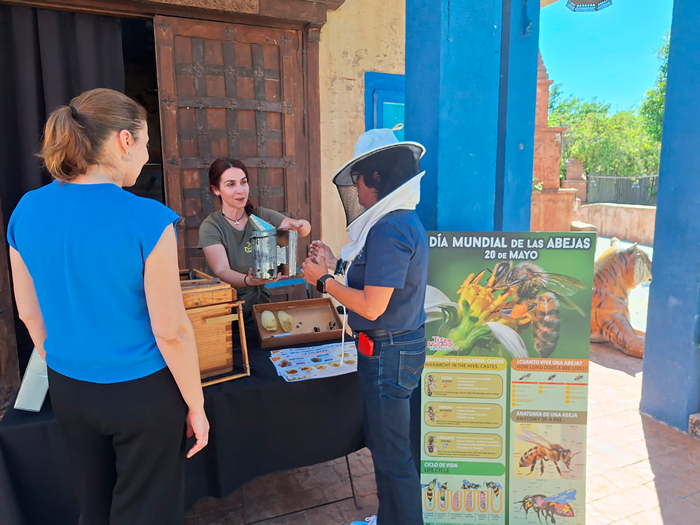
These stations use specialised NIP hives (Pollinator Insect Nests), specifically designed to shelter wild swarms without commercial beekeeping exploitation.
Through projects like these, Terra Natura Benidorm continues to strengthen its commitment to environmental education, wildlife conservation and biodiversity protection, encouraging visitors to better understand species that are essential for ecological balance.
The park is known for its “zoo-immersion” concept, where barriers between visitors and animals are hidden within the landscape and vegetation, creating the sensation of moving naturally through recreated ecosystems designed around the animals’ needs.